Learning Outcomes:
Define mycorrhizae and lichens as examples of mutualistic relationships in nature.
i. Explain the symbiotic relationship between fungi and plant roots in mycorrhizae.
ii. Describe the role of fungi in enhancing nutrient uptake and water absorption for plants in mycorrhizal associations.
iii. Discuss the mutualistic relationship between fungi and algae or cyanobacteria in lichens.
iv. Explain how fungi provide structural support, protection, and water retention for algae or cyanobacteria in lichens.
v. Recognize the role of algae or cyanobacteria in providing photosynthetic products as energy sources for fungi in lichens.
i. Mutualism: Nature's Collaborative Partnerships
In the intricate tapestry of life, organisms often form close relationships that benefit both parties involved. These symbiotic associations, known as mutualism, represent a testament to nature's ability to foster cooperation and interdependence. Among the diverse examples of mutualism, two stand out for their remarkable partnerships: mycorrhizae and lichens.
ii. Mycorrhizae: A Fungal-Root Alliance
Mycorrhizae, a term derived from Greek words meaning "fungus" and "root," represent a symbiotic association between fungi and plant roots. These partnerships are ubiquitous, with estimates suggesting that over 80% of plant species engage in mycorrhizal relationships.
In this intricate dance of mutual benefit, fungi form a network of filaments, or hyphae, that extend from the plant's roots, increasing the plant's access to nutrients and water. The fungus, in turn, receives carbohydrates and other organic compounds produced by the plant through photosynthesis.
The benefits of mycorrhizae are manifold. Plants with mycorrhizal partners often exhibit enhanced growth, increased resistance to drought and stress, and improved tolerance to pests and diseases. These benefits are particularly significant for plants growing in nutrient-poor soils.
iii. Lichens: A Symbiosis of Fungi and Photosynthesizers
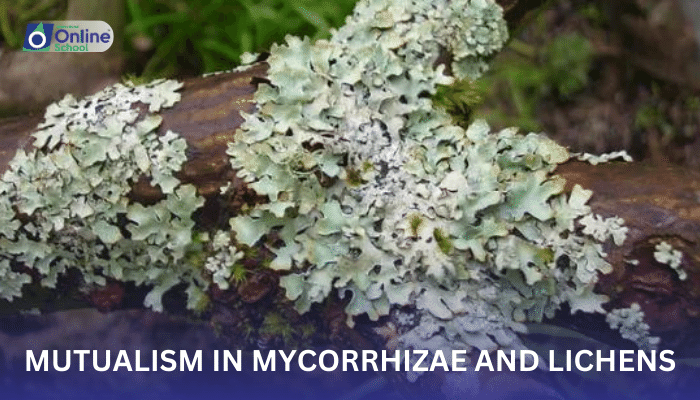
Lichens, those colorful, crusty organisms often found clinging to rocks and trees, represent another remarkable example of mutualism. These composite organisms are not single species but rather a symbiotic association between a fungus, known as the mycobiont, and an alga or cyanobacterium, known as the photobiont.
The mycobiont, with its threadlike hyphae, provides structural support, protection from harsh environmental conditions, and water retention for the photobiont. In return, the photobiont, through photosynthesis, produces carbohydrates and energy sources that sustain both partners.Lichens play a vital role in ecosystems, contributing to soil formation, weathering of rocks, and nutrient cycling. They are also indicators of environmental quality, as their presence or absence can signal changes in air and water pollution.
Mycorrhizae and lichens serve as elegant examples of mutualism, showcasing the intricate and beneficial relationships that exist between organisms in nature. These symbiotic partnerships not only enhance the survival and growth of the involved organisms but also contribute to the overall health and stability of ecosystems. As we continue to explore the natural world, we are likely to uncover many more examples of mutualism, further demonstrating the interconnectedness of life on Earth.
